Selecting Wall Thickness for Spiral-Welded Pipes: Is Thicker Always Safer? Quite the Opposite.
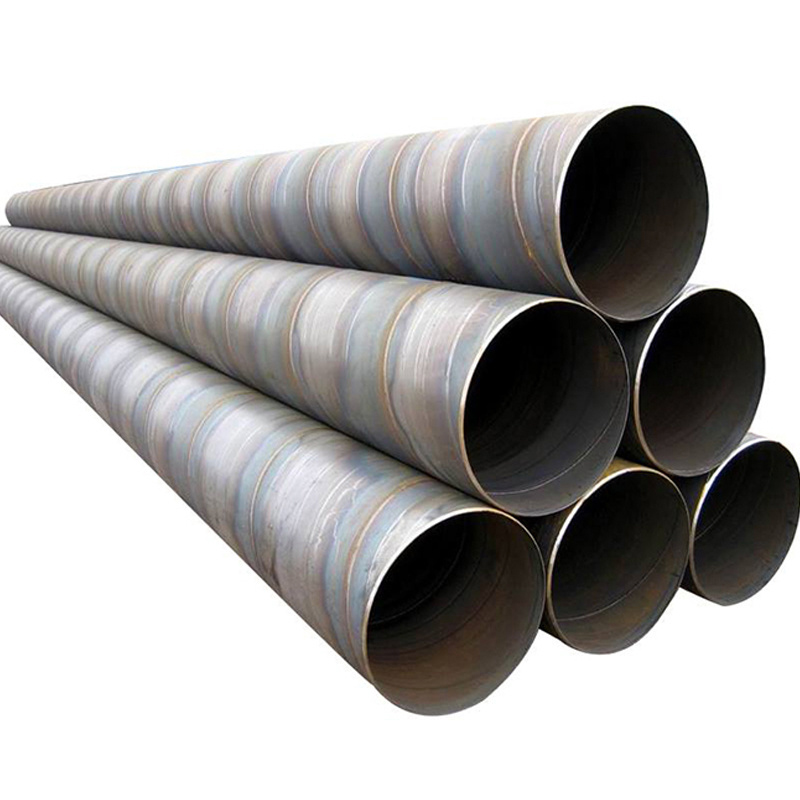
When purchasing spiral-welded pipes, many buyers instinctively assume that a greater wall thickness equates to a more reliable product. While this mindset is understandable, the real question in an engineering context is not "how thick can I go?" but rather "what thickness is actually required?" Wall thickness should not be determined by intuition, nor does a greater thickness automatically guarantee better safety. Specifying a wall that is too thin may fail to meet design requirements, while choosing one that is too thick results in a twofold waste—of both materials and construction costs—and imposes additional burdens on lifting operations, welding, and the design of supports and hangers.
The correct approach is to work backward: calculate the theoretical wall thickness using a simplified version of the Barlow formula—based on design pressure, pipe diameter, material yield strength, and the weld joint coefficient—and then add a corrosion allowance. For instance, with materials commonly used for spirally welded pipes, a design pressure of 1.6 MPa and a pipe diameter of DN800 might result in a theoretical wall thickness of only about 5–6 mm; adding a corrosion allowance of 1–2 mm means that a wall thickness of 7–8 mm is typically sufficient. Specific calculations and allowable stress values must adhere to the standards applicable to the project—such as API 5L, ISO 3183, EN 10217, or GB/T 9711—rather than relying on empirical guesswork to increase wall thickness.
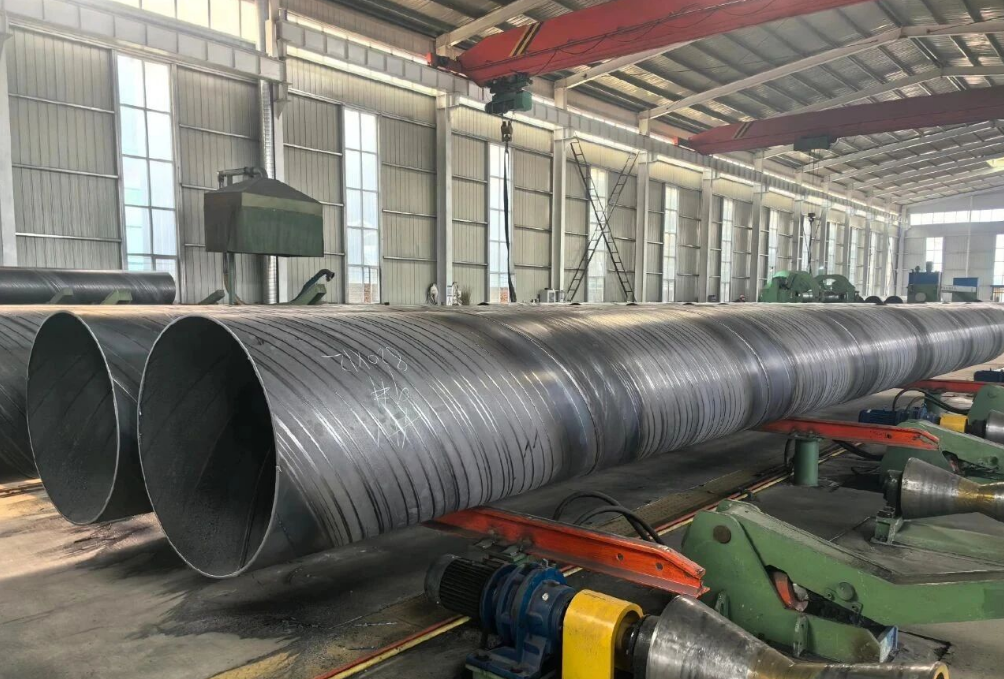
The burden imposed by increased wall thickness extends well beyond the cost of materials. In the manufacturing of spirally welded pipes, there are technical limits to wall thickness; increasing it leads to greater weight per meter, heavier lifting requirements, higher loads on supports and hangers, an increased volume of filler material needed for field circumferential welds, and longer welding times. For export projects and international procurement, these costs are ultimately reflected in the total contract price and the construction schedule. Unnecessary thickening does not make a pipeline any safer—it simply means paying to mitigate a non-existent risk.
There is another often-overlooked aspect: applicable standards typically allow for a negative deviation in wall thickness. For instance, common specifications may permit a negative deviation of 10% to 12.5%—the exact percentage and the conditions under which it applies depend on the specific version of the standard referenced in the contract. This means that if a contract specifies an 8 mm wall thickness, the actual delivered product might measure only 7.2 mm or even less; that difference could well be the safety margin originally factored into the design. In international procurement, if a contract merely states that the product must "comply with the standard," the supplier cannot be deemed non-compliant if the delivered goods fall at the lower limit permitted by that standard.
If the design wall thickness is tightly constrained, the contract and technical agreement must clearly define the tolerances. You might specify that "wall thickness shall be delivered with a positive tolerance," or set a strict upper limit on negative deviation—for example, "negative tolerance shall not exceed 0.5 mm"—and verify this during acceptance by checking the actual measured wall thickness, the Material Test Certificate (MTC), and third-party inspection results. This does not negate the standard; rather, it narrows the acceptance criteria—within the bounds permitted by the standard—to the specific requirements of the project. Conversely, if a contract only specifies a nominal wall thickness without addressing the direction of the tolerance, discovering upon delivery that the actual thickness is at the very bottom of the allowable negative range will lead to disputes—by which point both time and money have already been lost.
Ultimately, determining the wall thickness for spirally welded pipes is a matter of precise calculation, not a simple choice between "larger" or "smaller." By accurately calculating design pressure, pipe diameter, material properties, and corrosion allowance, you can determine the exact thickness required. Then, by tightening the terms regarding negative deviation in the contract, you ensure that the pipes delivered truly align with the figures on the blueprints. Simply opting for a greater thickness does not guarantee safety; accurate calculation and strict control over tolerances do.