The core differences between hot-dip galvanizing and cold galvanizing(electrogalvanizing) of galvanized pipes
In steel pipe corrosion protection technology, galvanizing is one of the most widely used methods. Depending on the process, it is mainly divided into hot-dip galvanizing and cold galvanizing(electrogalvanizing). Although both technologies aim to prevent rust, they differ significantly in their process principles, performance, and application range. This article will systematically analyze six core differences between hot-dip galvanizing and cold galvanizing(electrogalvanizing).
I. Different Process Principles and Operating Temperatures
Hot-dip galvanizing, also known as hot-dip zinc plating, involves immersing pre-treated steel pipes in molten zinc at temperatures reaching 450℃ to 480℃. At this high temperature, a metallurgical reaction occurs between the steel pipe surface and the molten zinc, forming a zinc-iron alloy layer.
Cold galvanizing is essentially electrogalvanizing , where zinc ions are deposited onto the steel pipe surface through an electrolytic reaction at room temperature. This process does not involve high-temperature metallurgical reactions and is a physical coating type of corrosion protection.
II. Significant Differences in Zinc Coating Thickness
Hot-dip galvanized layers are typically thicker, generally exceeding 65μm and sometimes even surpassing 100μm. This thickness advantage directly translates into stronger corrosion resistance.
Cold galvanizing(electrogalvanizing) layers are relatively thin, generally between 5-30μm, resulting in relatively limited corrosion resistance, especially in harsh environments where the protection period is shorter.
III. Comparison of Surface Morphology and Smoothness
Hot-dip galvanized steel pipes often exhibit a unique zinc flower pattern on the surface, with a relatively uniform overall appearance. However, due to the high-temperature process, minor runs or slight unevenness may exist.
Cold-dip galvanized(electrogalvanizing) steel pipes have a smoother surface and a more uniform color. However, close inspection may reveal that the coating distribution is less uniform than hot-dip galvanizing, with incomplete coverage often appearing at the edges.
IV. Coating Coverage and Integrity
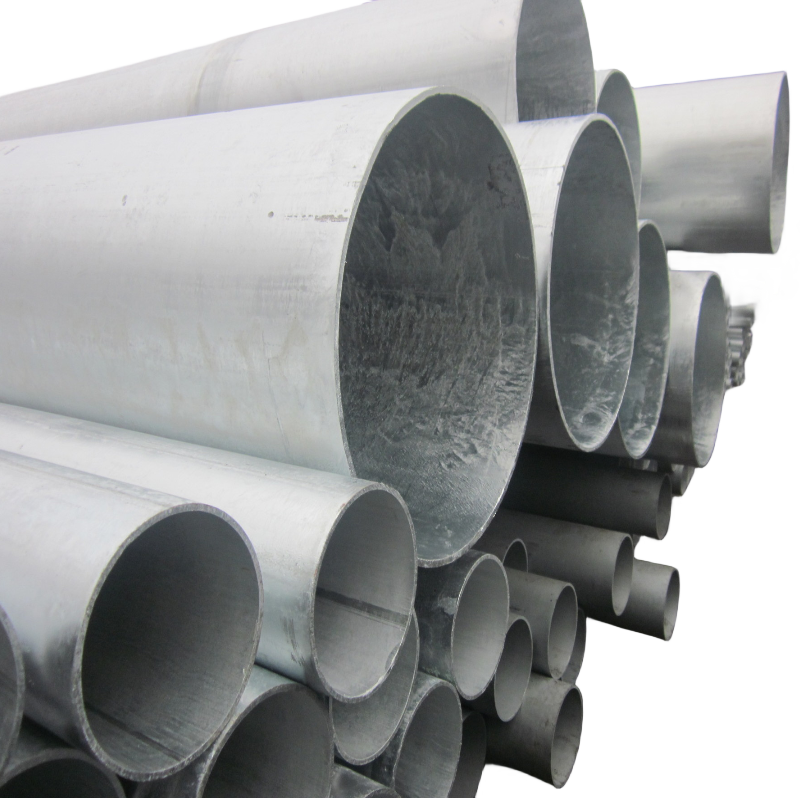
Hot-dip galvanizing achieves complete coverage of the inner and outer walls of the steel pipe, including every corner inside the pipe, forming a complete anti-corrosion system.
Cold galvanizing(electrogalvanizing) mainly covers the outer surface of the steel pipe; the inner wall often cannot be effectively galvanized or the coating is extremely thin, creating blind spots in corrosion protection. This is one of the important reasons for its limited corrosion resistance.
V. Coating Adhesion and Durability
Hot-dip galvanized steel pipes are metallurgically bonded to the steel pipe substrate, forming a zinc-iron alloy transition layer. This layer exhibits strong adhesion and is not easily peeled off. Even with surface scratches, the surrounding zinc layer continues to protect the substrate through sacrificial anode action.
Cold-dip galvanized(electrogalvanizing)steel pipes are primarily physically bonded to the steel pipe substrate, resulting in weaker adhesion. They are prone to detachment under external impact or long-term environmental conditions. Once the coating is damaged, its anti-corrosion effect is significantly weakened.
VI. Cost and Application Scope
Hot-dip galvanized steel pipes have relatively high production costs due to their complex process, high energy consumption, and large zinc consumption, but they offer a long service life and low maintenance costs.
Cold-dip galvanized(electrogalvanizing) steel pipes have lower initial investment, making them suitable for budget-constrained or short-term applications. However, considering their shorter maintenance cycles and replacement frequency, long-term operating costs may actually increase.
According to relevant Chinese national standards, cold-galvanized(electrogalvanizing) steel pipes are explicitly prohibited from use in gas transmission pipelines and drinking water pipeline systems due to their limited corrosion resistance, insufficient zinc coating adhesion, and potential safety hazards. Hot-dip galvanized steel pipes, on the other hand, are widely used in important fields such as building structures, municipal engineering, and water and gas transmission due to their superior corrosion resistance and safety.
Choosing between hot-dip and cold-dip galvanizing(electrogalvanizing) requires comprehensive consideration of factors such as the operating environment, expected lifespan, safety requirements, and cost budget. For critical structures exposed to outdoor or corrosive environments for extended periods, hot-dip galvanizing is undoubtedly a more reliable choice; while for indoor short-term use or secondary structures, cold-dip galvanizing(electrogalvanizing) can serve as an economical alternative. Understanding the fundamental differences between these two processes helps us make more scientific and rational material selections in engineering practice.